Introduction: The Digital Revolution in Competition
Over the past two decades, a quiet revolution has transformed entertainment, technology, and sports alike. This revolution has no stadiums filled with grass fields, no referees with whistles, and no physical trophies forged in metal. Instead, it thrives within digital arenas, on glowing screens, and in the minds and hands of millions of gamers around the world. This phenomenon is Esports — electronic sports — the organized, competitive world of video gaming.
Once dismissed as a niche pastime for hobbyists, Esports has grown into a multibillion-dollar global industry, complete with professional teams, massive tournaments, sponsorships, and international fame. The rise of Esports tells a story not only of gaming, but of how technology, community, and culture can unite to redefine what competition truly means.
The Origins of Competitive Gaming
The roots of Esports can be traced back to the 1970s and 1980s, when early arcade games like Space Invaders and Pac-Man captivated millions. In 1980, Atari held one of the first known gaming competitions — the Space Invaders Championship — which drew over ten thousand participants across the United States. It was a modest beginning, but it sparked an idea: video games could be more than entertainment; they could be competitive.
The 1990s saw the emergence of LAN parties and early online play. Titles like Doom, Quake, and StarCraft pioneered multiplayer gaming, creating communities where skill and strategy were celebrated. The first professional leagues began to form, and small-scale tournaments laid the foundation for what would become a global Esports ecosystem.
The 2000s: The Birth of a Global Esports Scene
The new millennium marked a turning point. High-speed internet and the explosion of PC gaming allowed players to connect globally. South Korea emerged as the birthplace of modern Esports, with StarCraft: Brood War becoming a national obsession. Televised matches drew millions of viewers, and professional players became celebrities.
Organizations such as the Korean e-Sports Association (KeSPA) standardized tournaments, created rules, and legitimized gaming as a professional pursuit. Around the same time, the Western world caught on with competitive titles like Counter-Strike, Warcraft III, and Halo. Tournaments like the World Cyber Games and Electronic Sports World Cup began uniting players internationally, giving rise to the first generation of professional gamers.
The Streaming Revolution: Twitch and YouTube
The single most transformative force in Esports came not from a new game, but from a new way of watching games. The rise of live streaming platforms like Twitch and YouTube Gaming in the 2010s gave Esports the visibility it needed to explode in popularity.
Fans no longer needed to attend tournaments in person — they could watch their favorite teams compete live from anywhere in the world. Streamers became influencers, blending entertainment with skill. This democratized the industry, allowing grassroots competitions and amateur players to build their own followings. It also attracted major sponsors and advertisers, who recognized that millions of engaged viewers were tuning in daily.
The Rise of Esports Titles: Games that Defined Generations
Some games transcend entertainment and become Esports legends. These titles shape entire eras of competitive gaming and attract millions of fans globally. Among them are:
League of Legends (LoL)
Developed by Riot Games, League of Legends became a cornerstone of modern Esports. With millions of daily players and the League of Legends World Championship drawing audiences comparable to traditional sports finals, LoL proved that strategy and teamwork could thrive in a digital format.
Counter-Strike: Global Offensive (CS:GO)
Valve’s Counter-Strike franchise defined first-person shooter Esports. CS:GO, in particular, became a tactical and skill-based phenomenon. Its simple concept — attack or defend the bombsite — hides incredible depth, strategy, and precision.
Dota 2
Known for its complexity and depth, Dota 2 hosts one of the most lucrative Esports tournaments in the world: The International. With prize pools exceeding tens of millions of dollars, it set a standard for how far Esports could go financially and competitively.
Fortnite
Epic Games’ Fortnite blurred the line between gaming, entertainment, and culture. Its Battle Royale format, colorful aesthetic, and crossover events attracted not just gamers but mainstream audiences — making it one of the most inclusive Esports titles in history.
Overwatch, Call of Duty, and Valorant
These modern shooters introduced franchise-style leagues and new production standards, making Esports resemble traditional sports in structure and professionalism.
The Professionalization of Esports
As Esports grew, it began to mirror the infrastructure of traditional sports. Teams were no longer just groups of friends; they became organizations with coaches, analysts, nutritionists, and psychologists. Training schedules became rigorous, with players dedicating up to ten hours a day to practice.
Major organizations such as Team Liquid, Fnatic, Cloud9, and T1 established themselves as global brands. They signed sponsorship deals with major corporations, from energy drink companies to luxury apparel brands. Esports arenas began to appear in major cities, and universities introduced Esports scholarships, recognizing gaming as a legitimate career path.
The industry was now professional, structured, and globally recognized.
The Economic Power of Esports
By the late 2010s, Esports had evolved into an economic powerhouse. Global revenues surpassed the billion-dollar mark, driven by sponsorships, media rights, merchandise, and ticket sales. Prize pools for major tournaments rivaled those of traditional sports — with The International and Fortnite World Cup offering multi-million-dollar winnings.
Major broadcasters began integrating Esports into their programming. Traditional sports clubs like the Golden State Warriors and Paris Saint-Germain invested in Esports teams. The line between conventional sports and gaming continued to blur, opening up new markets and audiences.
Esports and Mainstream Culture
Esports didn’t just capture gamers; it influenced mainstream culture. Music artists performed at tournaments. Fashion brands released Esports-inspired apparel. Celebrities invested in gaming organizations. The idea of a “gamer” transformed — no longer a stereotype, but a badge of creativity, intelligence, and skill.
Streaming personalities like Ninja and Pokimane became global icons, representing a new generation of entertainment figures. Meanwhile, Esports’ integration into pop culture demonstrated its reach beyond the screen — into art, education, and even politics.
The Science Behind the Screen: Training and Psychology
Behind every professional gamer is a story of discipline, focus, and mental endurance. Contrary to misconceptions, top-tier Esports athletes undergo intense mental and physical training. Reaction times, strategic thinking, hand-eye coordination, and team communication are critical components of success.
Coaches study gameplay data and opponent tendencies. Teams review match footage like football players analyze plays. Nutrition and mental health have also become priorities, as burnout and pressure are significant challenges in the fast-paced Esports environment.
Esports performance now even overlaps with neuroscience and cognitive research, exploring how gaming affects the brain and how players can optimize focus and reflexes.
The Role of Technology and Innovation
Esports has always been tied to technological progress. From high-refresh monitors to advanced input devices, every improvement in hardware enhances competitive performance. Virtual Reality (VR) and Augmented Reality (AR) are already shaping new forms of gameplay and broadcasting.
Artificial intelligence and analytics tools are being used to analyze strategies, predict outcomes, and optimize player performance. Cloud gaming is breaking down barriers, allowing players worldwide to compete without expensive equipment. The future of Esports is closely linked to the evolution of gaming technology itself.
The Global Stage: Major Tournaments and Events
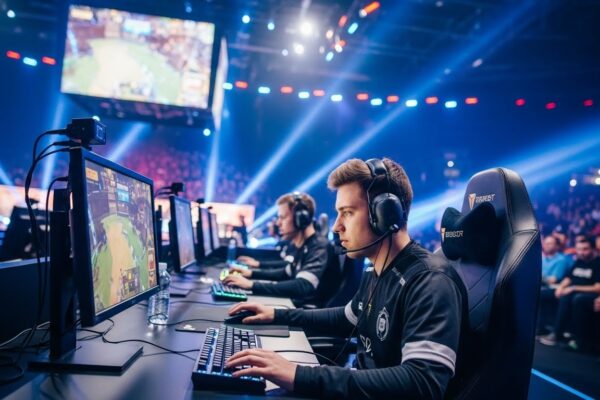
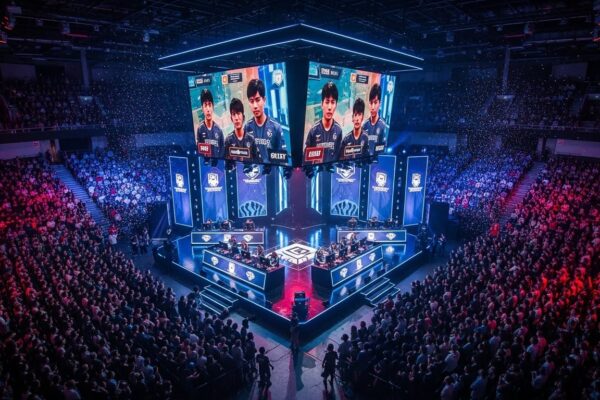
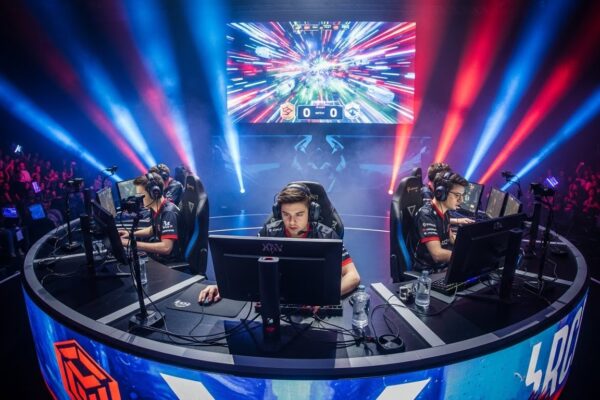
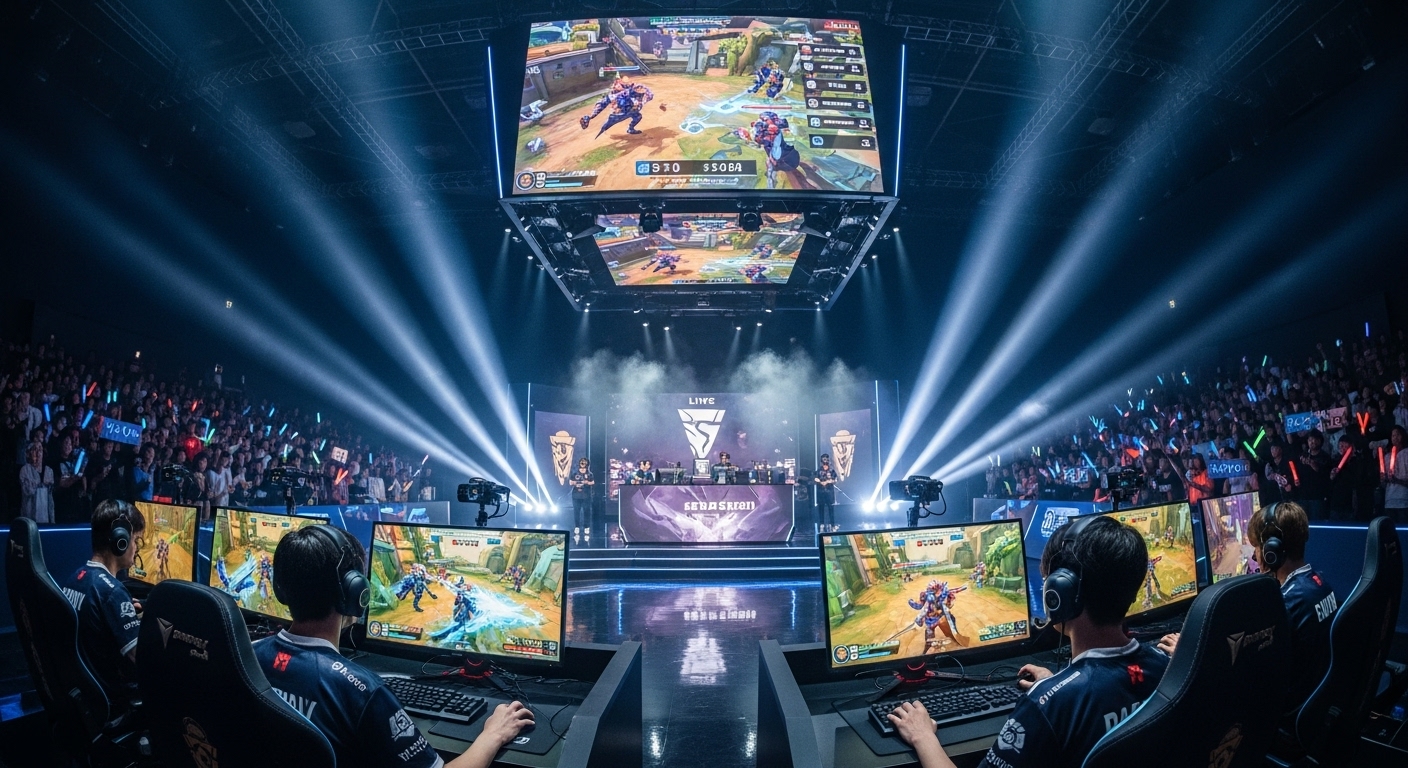
Today, Esports tournaments fill massive arenas once reserved for concerts and sporting events. Competitions like the League of Legends World Championship, The International, and CS:GO Majors attract tens of thousands of fans in person and millions online.
These events are produced with cinematic precision — featuring light shows, commentary desks, pre-game analysis, and dramatic storylines. The passion of fans mirrors that of football or basketball supporters. Teams have chants, rivalries, and histories that make each tournament not just a game, but a global celebration of skill and strategy.
Esports Education and Career Opportunities
Esports has opened countless doors beyond gaming. Today, careers in event management, marketing, broadcasting, content creation, coaching, and game development flourish within the industry. Universities worldwide offer degrees and scholarships in Esports-related fields, preparing students for an ecosystem that blends technology, creativity, and competition.
Educational programs also highlight the transferable skills gaming develops — teamwork, problem-solving, leadership, and adaptability. Far from being a distraction, gaming has become a tool for growth and opportunity.
Challenges Facing the Esports Industry
Despite its rapid success, Esports faces several challenges that shape its evolution. Player burnout, sustainability of organizations, and lack of regulation are ongoing concerns. Many players retire young due to intense schedules and stress.
There are also questions about fair play, including cheating, match-fixing, and doping (in the form of performance-enhancing stimulants). Maintaining integrity in competition is a growing focus for regulatory bodies.
Additionally, gender diversity remains an important issue. Women continue to face barriers in the industry, though change is underway as more inclusive tournaments and organizations promote equality.
The Future of Esports
The future of Esports is not a question of if it will grow, but how far it will go. With new technologies like the metaverse and virtual reality, the definition of “competition” is expanding. Esports could one day merge seamlessly with real-world sports, offering hybrid experiences that engage audiences on multiple levels.
Global audiences continue to rise, and new markets — particularly in Asia, Africa, and South America — promise even greater expansion. Governments are beginning to recognize Esports as official sports, paving the way for inclusion in major international competitions.
What was once a hobby has become a global movement, inspiring millions to dream, compete, and connect.
The Human Side of Esports
At its heart, Esports is not about technology or money — it’s about people. It’s about the friendships formed in virtual worlds, the passion shared among fans, and the drive of competitors who dedicate their lives to mastering their craft.
Esports unites players across languages, cultures, and continents. Whether it’s a teenager competing from their bedroom or a pro standing on a world stage, the essence remains the same — the thrill of the game, the pursuit of excellence, and the connection through play.
Conclusion: The Game That Changed the World
The story of Esports is a testament to how human creativity and technology can combine to build something extraordinary. It has rewritten the rules of entertainment, challenged perceptions of sports, and created new pathways for success.
From small arcade halls to global stadiums, from pixelated graphics to immersive worlds, Esports stands as a symbol of a connected, digital generation. It’s not just a game anymore — it’s a culture, a community, and a future that continues to evolve with every click, every match, and every dream that begins with a controller in hand.