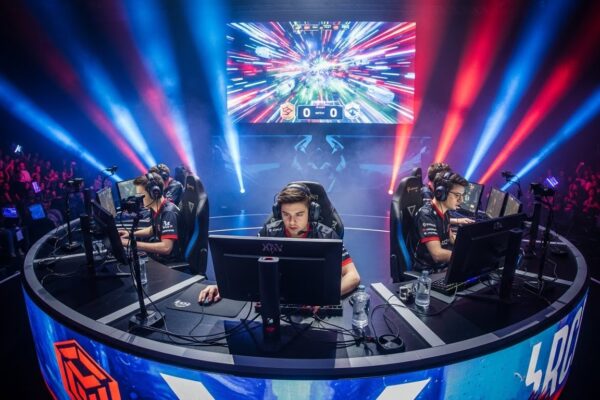
Over the past decade, esports has evolved from a niche activity into a global phenomenon. What once began as casual, multiplayer games among friends has now grown into an industry worth billions, with millions of fans tuning in to watch their favorite players and teams compete at the highest levels. Today, esports is not only changing the way we perceive gaming but also how we view sports and entertainment. In this blog post, we will explore the rise of esports, the factors contributing to its growth, the key games and tournaments that define the scene, and what the future holds for this rapidly expanding industry.
The Evolution of Esports: From LAN Parties to Global Tournaments
Esports, or electronic sports, refers to competitive video gaming, where players or teams compete against each other in various video games, often for cash prizes, sponsorships, and glory. While gaming itself has been around for decades, the competitive aspect of gaming began gaining serious traction in the late 1990s and early 2000s.
In its early days, esports was mainly seen in the form of local area network (LAN) parties. Gamers would gather in small groups to play multiplayer games like Quake or Warcraft III in a shared physical space. These events were fun, but they remained relatively small and localized, with few outside the gaming community paying attention.
The first significant shift came with the rise of the internet. With online multiplayer games like StarCraft, Counter-Strike, and League of Legends, players were no longer limited to physical LAN events but could compete against others from around the world. The early 2000s saw the establishment of the first professional esports leagues, such as the World Cyber Games and Electronic Sports World Cup, which began to bring more recognition to the competitive gaming scene.
Esports truly exploded in the 2010s, with major tournaments and events broadcasting globally. Games like League of Legends, Dota 2, Counter-Strike: Global Offensive, and Overwatch became household names. Massive tournaments like The International (TI) for Dota 2 and World Championship for League of Legends attracted not only tens of thousands of live spectators but also millions of online viewers across platforms like Twitch, YouTube, and Facebook Gaming. These events have elevated esports from a hobby to a legitimate spectator sport, with professional players earning substantial salaries and endorsements.
The Key Factors Behind the Growth of Esports
Several factors have contributed to the explosive growth of esports over the past decade. These elements are the backbone of the esports ecosystem, attracting millions of fans and players worldwide.
- The Rise of Streaming Platforms
The advent of streaming platforms such as Twitch, YouTube Gaming, and Facebook Gaming has been one of the most important catalysts for the growth of esports. These platforms allow viewers to watch live gameplay, interact with streamers, and engage with the gaming community. This real-time access to esports tournaments and gameplay has made it easier than ever for fans to follow their favorite players, teams, and games.
Twitch, in particular, has played a pivotal role in popularizing esports by hosting major tournaments and providing a space for casual gamers and professional players alike to build their audiences. Many of the world’s top esports athletes have also turned to streaming to connect with their fans, providing live commentary, behind-the-scenes content, and even casual gameplay sessions.
- The Global Appeal of Online Games
Esports thrives on the global appeal of online multiplayer games. Unlike traditional sports, where physical limitations and geographic boundaries may restrict participation, online games allow players from all over the world to compete against each other, irrespective of location. Titles such as League of Legends, Fortnite, Call of Duty, and Valorant have large international communities, with millions of players spanning different countries and cultures.
This global connectivity not only creates a massive player base but also ensures that the esports scene is vibrant and diverse, with different regions excelling in different games. For example, South Korea has long been a powerhouse in StarCraft and League of Legends, while North America and Europe have had strong performances in games like Counter-Strike and Overwatch.
- The Professionalization of Esports
As the esports scene has evolved, so too has its level of professionalism. Esports organizations have become structured and developed much like traditional sports teams. These organizations recruit and train players, manage sponsorship deals, and participate in leagues and tournaments. Players, who were once seen as amateurs, are now treated as professionals, with contracts, salaries, and benefits.
With this professionalization comes increased support from sponsors, brands, and investors. Major corporations like Coca-Cola, Intel, and Red Bull have partnered with esports events, teams, and players, further legitimizing the industry and pushing it into the mainstream. In addition, esports has also garnered attention from traditional sports organizations, such as the NBA and NFL, who are now investing in esports leagues and teams.
- The Development of Esports Infrastructure
To accommodate the growing demand for esports competitions, the industry has developed a robust infrastructure. Dedicated esports arenas, streaming platforms, and event organizers are now standard parts of the esports landscape. Cities like Los Angeles, Seoul, and Shanghai have become esports hubs, with large arenas hosting major tournaments and leagues. These venues offer top-notch production value, creating an exciting environment for both players and fans.
In addition to live events, esports organizations have also invested in training facilities, performance coaches, and analytics teams to help players improve their skills. This level of support ensures that esports athletes can compete at the highest level and maintain peak performance throughout the year.
The Popular Games and Tournaments Defining Esports
While there are countless games that have become staples of the esports world, several titles stand out as iconic and dominate the competitive gaming scene.
- League of Legends (LoL)
League of Legends is arguably the most popular and influential esports title in the world. Developed by Riot Games, LoL has a massive global player base and one of the most competitive esports scenes. The League of Legends World Championship, often referred to as the “Worlds,” is the crown jewel of the esports calendar, drawing millions of viewers annually and offering prize pools that reach tens of millions of dollars.
- Dota 2
Another major title in esports is Dota 2, developed by Valve Corporation. Dota 2 is known for its highly strategic and complex gameplay, making it a favorite among hardcore gamers. The International, an annual tournament for Dota 2, boasts one of the largest prize pools in esports history, often surpassing $30 million, attracting the best teams from around the world.
- Counter-Strike: Global Offensive (CS:GO)
CS:GO is one of the most well-established esports titles, with a competitive scene that dates back to the early 2000s. Developed by Valve and Hidden Path Entertainment, CS:GO is a tactical first-person shooter that has captured the hearts of millions of players and fans worldwide. Major tournaments like ESL Pro League and CS:GO Major Championships are watched by millions of viewers, and the game continues to enjoy a thriving competitive scene.
- Fortnite
While Fortnite is not a traditional esports title in the same way as LoL or CS:GO, it has carved out its place in the competitive gaming world. The game’s battle royale mode has garnered massive popularity, and its esports scene has exploded in recent years. With a focus on building mechanics and fast-paced action, Fortnite has become a favorite among both casual and professional players, with its competitive events offering huge prize pools and attracting top-tier talent.
- Valorant
Valorant, developed by Riot Games, is a tactical first-person shooter that has quickly gained a foothold in the competitive gaming world. Its blend of precise shooting mechanics and hero abilities has made it a popular choice for esports tournaments. The game’s early tournaments, such as VCT (Valorant Champions Tour), have already become marquee events in the esports calendar.
The Future of Esports: Trends and Opportunities
As esports continues to grow, the future looks promising. Several trends suggest that the industry will continue to evolve in exciting and unexpected ways.
- Mobile Esports
Mobile gaming has seen massive growth, particularly in Asia, and mobile esports is expected to be a major growth area in the coming years. Games like PUBG Mobile, Free Fire, and Mobile Legends are already hosting competitive events with large audiences. As mobile technology continues to improve, more competitive games will emerge on mobile platforms, opening up esports to a broader audience.
- Esports in Traditional Sports Venues
In the coming years, we may see more integration between esports and traditional sports. Stadiums and arenas that typically host events like football, basketball, or hockey could also be home to esports tournaments. The potential for hybrid events, where traditional sports and esports are combined, is an exciting prospect for the future.
- The Expansion of Esports into Education
Esports is becoming increasingly popular in educational institutions, with universities offering scholarships, building esports teams, and developing esports curriculums. This trend is helping to legitimize esports and pave the way for the next generation of professional players, coaches, analysts, and broadcasters.
Conclusion: The New Age of Competitive Gaming
Esports has come a long way since its humble beginnings as a niche hobby. Today, it is a billion-dollar industry with a global fan base, professional players, and an expanding ecosystem. With the rise of streaming platforms, the professionalization of the industry, and the growing appeal of online gaming, esports is positioned to continue its rapid growth in the coming years.
As esports continues to evolve, it is clear that it is more than just a passing trend. It represents a new form of entertainment that blends the excitement of traditional sports with the innovation of digital media. For players, fans, and industry professionals, the future of esports is incredibly bright, offering opportunities that were once unimaginable. The question is no longer “Will esports be the future?” but “How much further can it go?”